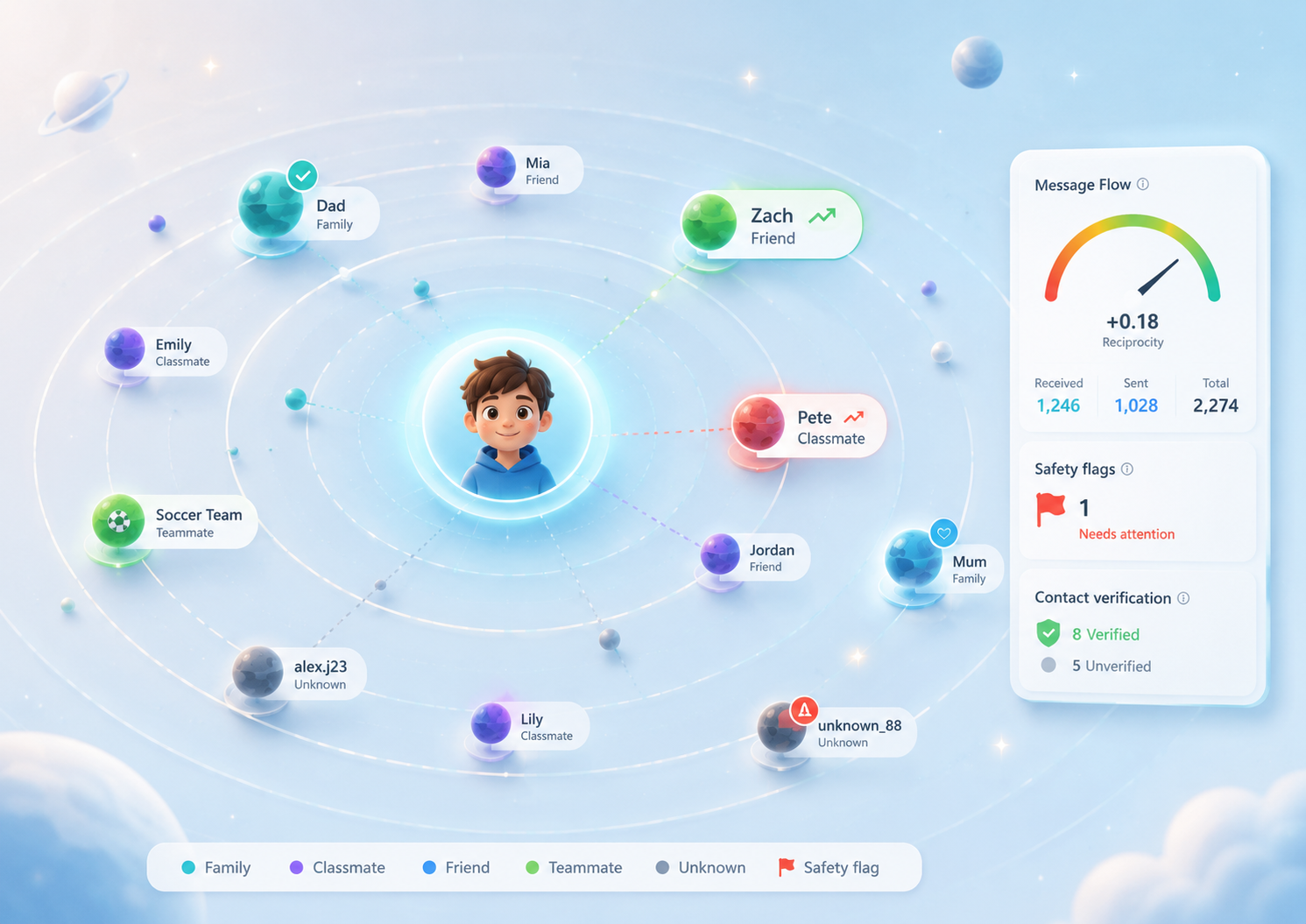
I thought I had a decent handle on who my child was messaging. Then I looked at the Joey analytics and realised there was a whole layer of his social life I only half knew.
Not secret exactly. Just not the kind of thing kids volunteer. New names show up. Old friends fade. A group chat gets busy. A contact I have never heard of suddenly becomes a big part of the week.
That is why Joey online safety analytics matters to me. It is not a feed of messages to scroll through. It is a way to see the shape of your child’s social world, so you can ask better questions without turning into a detective.
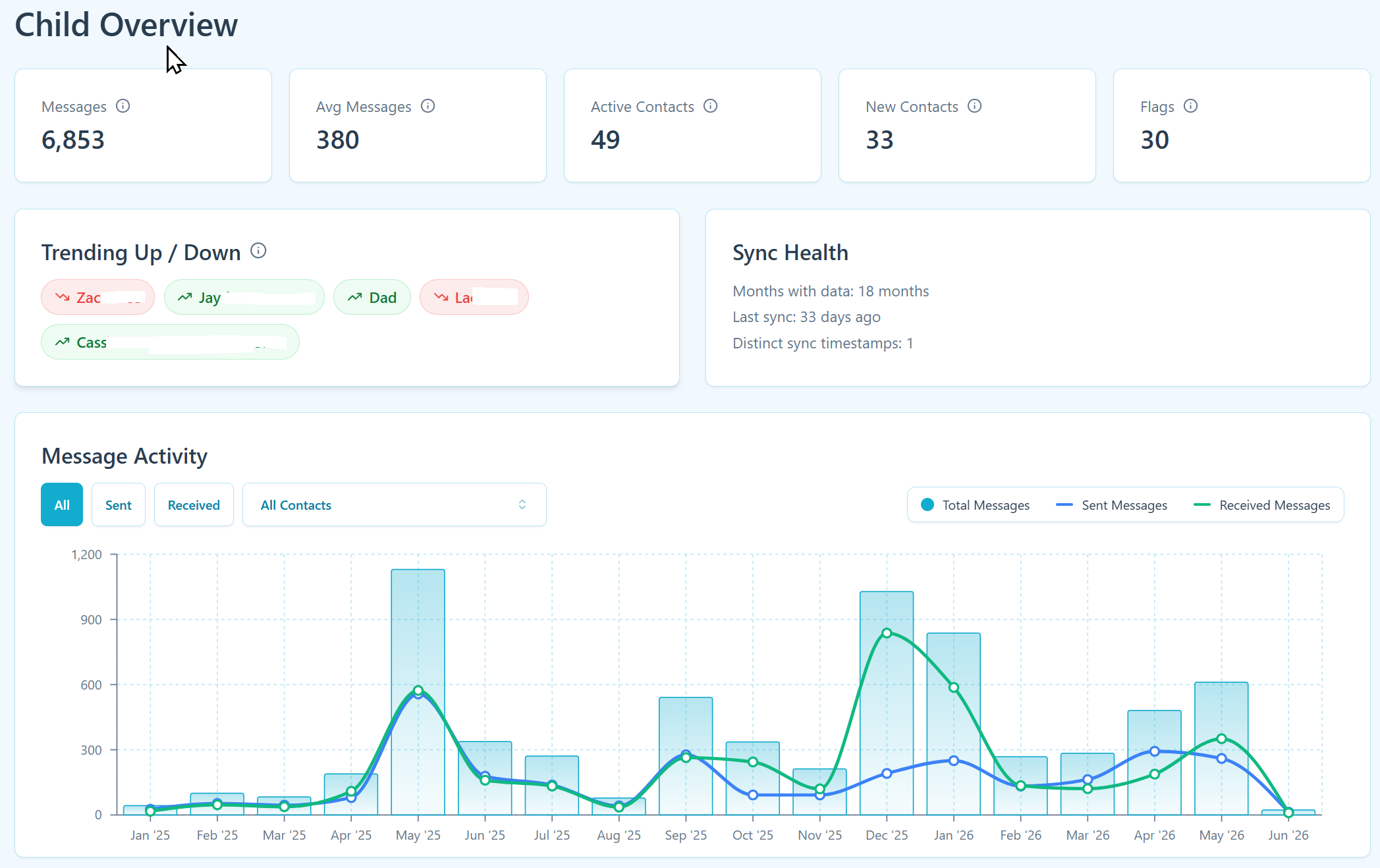
The Child Overview gives parents a quick read on message volume, active contacts, new contacts, flags, and who is trending up or down.
The Child Overview gives you the pattern
The first screen is deliberately simple. Messages, average messages, active contacts, new contacts, flags, and who is trending up or down. Most parents will understand it in a few seconds, which is the point.
I like it because it does not ask me to read a thousand messages. It shows me when the social gravity is shifting. Someone is moving closer. Someone else is drifting out. A new contact is appearing more often. A flag has shown up in a place I might not have expected.
This is the kind of information kids do not usually bring to the dinner table. Not because they are hiding everything. Often they just do not think in trends. They are living it day to day.
The bit I keep coming back to is movement
A kid might message Pete every day for months and then suddenly not much at all. Maybe nothing happened. Kids drift, and that is normal. But maybe something did happen, and I would never know unless I saw the trend.
That gives me a normal question to ask later: “Whatever happened to Pete?”
The opposite is just as useful. A new kid appears. Let’s call him Zach. Message volume is rising and I have not heard the name before. That gives me another normal question: “Who is Zach? You seem to be messaging him a fair bit.”
That is the feature for me. Not more data for the sake of it. Better questions.
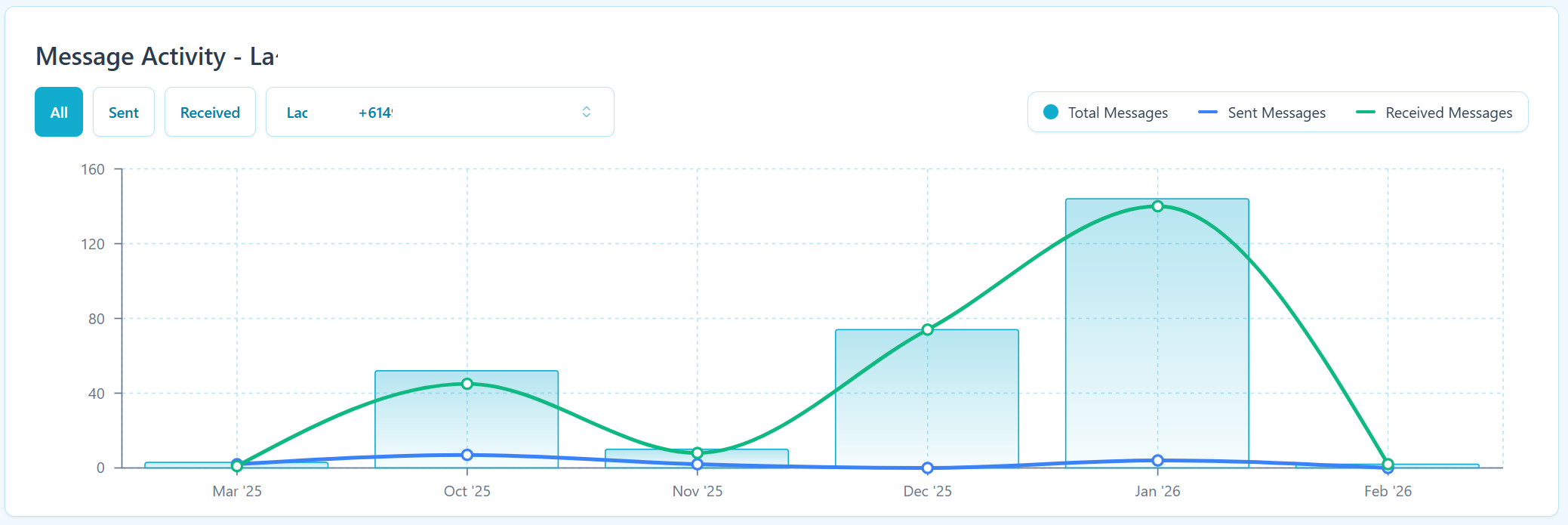
Filtering by one contact helps parents see whether a relationship is growing, fading, or changing over time.
The Social Graph is where most parents will stop
The Social Graph is the bit where I think most parents will stop and go, hang on, who are all these people?
Instead of a long list of names and numbers, you see your child in the middle and their messaging world around them. Family. Friends. Classmates. Teammates. Trusted contacts. Contacts you have not reviewed yet. Contacts with flags.
I would challenge any parent to look at their child’s top 30 contacts and honestly say they know more than 60 percent of them. I do not mean recognise the name. I mean actually know who they are, how they know your child, and whether you would feel comfortable with how much they are messaging.
That is not a criticism of parents. It is just the reality of kids with phones. Their social world moves quickly, and a lot of it happens out of sight.
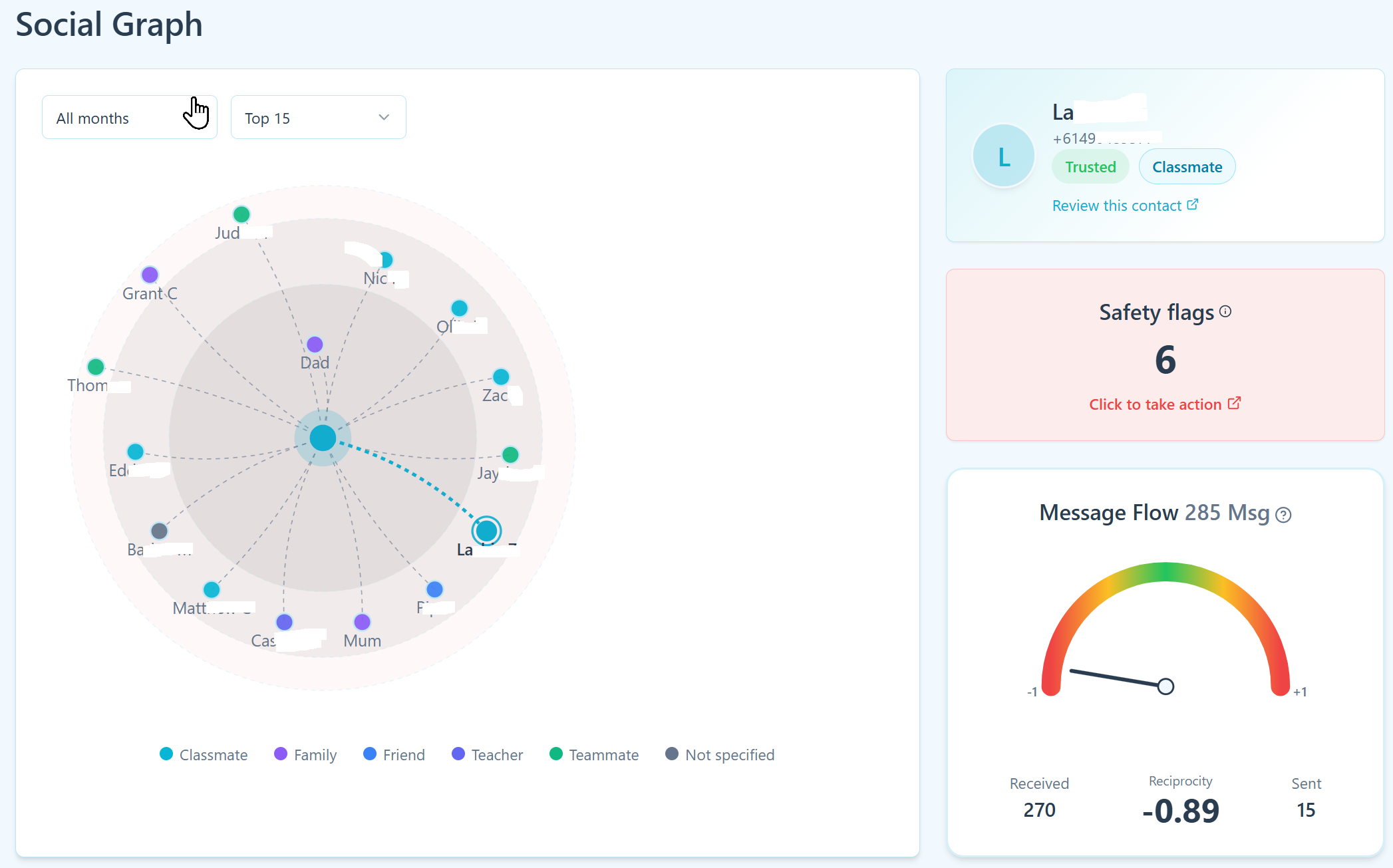
The Social Graph turns a messy contact list into a visual map of your child’s messaging world.
Message Flow tells a different story
Message Flow is more useful than it sounds. It shows how many messages your child sends to a contact compared with how many they receive back. That creates a reciprocity score, which is a simple way to understand whether a relationship looks balanced or one-sided.
If my child is receiving far more messages than they send, I want to know why. Maybe it is harmless. Maybe it is just a chatty friend. But maybe someone is spamming them, pressuring them, or not reading the room.
If my child is sending far more than they receive, that tells a different story. Maybe they are chasing attention. Maybe they are over-messaging. Maybe they need a gentle chat about social cues and giving people space.
That is not a punishment conversation. It is a coaching conversation. Kids are still learning how to read the room, and sometimes the pattern helps you see where they might need a nudge.
Safety flags make the graph useful
A flag on its own is useful. A flag attached to a kid your child messages every day is a different thing.
That is where Joey online safety analytics becomes more than interesting. It connects Smart Alerts to the actual relationship. You can see who the contact is, whether the relationship is growing, and whether there are safety flags attached. Then you can review the contact and decide what they are: trusted, family, classmate, teammate, friend, or someone you want to keep an eye on.
Not every flag means danger. A trusted contact can still say something dumb. A good kid can have a messy week in a group chat. The value is context. Who is this person. How often are they messaging. Is the relationship changing. Are there flags. What should I ask my child.
Contact Verification closes the loop
The Social Graph is not just a pretty picture. It gives you a way to clean up what you know.
When I see a name I recognise, I can mark that person as trusted or label the relationship properly. Family. Classmate. Teammate. Friend. When I see a number or account I do not know, I can review it later and ask about it in a normal way.
That sounds small, but it changes how the whole system feels. Your child’s messaging world starts as a mess of names, numbers, and accounts. Over time, you turn it into something you understand.
Why this matters
A lot of online safety products stop at alerts. I think that is too thin.
A bullying alert matters more when you know it is coming from someone your child messages every day. A suspicious contact alert matters more when that person is suddenly moving closer into the inner circle. A money ask matters more when it is attached to a contact your child has never mentioned.
The analytics show the relationship around the signal.
I have not seen another product on the market that gives parents this kind of relationship intelligence. That is a big part of why we built it. Not to make parents paranoid. To help us see patterns that are otherwise invisible.
How I would actually use it at home
I would not sit my child down with a dashboard open and start interrogating them. That would be weird, and it would probably make the whole thing less useful.
The best use is much more ordinary. You notice something, and later you ask a normal question.
“Who is Zach?”
“Whatever happened to Pete?”
“You and Freddie seem to be messaging a lot lately, how is that going?”
“I noticed this contact had a couple of flags. Do you know what that is about?”
That is the tone I want in our house. Curious. Calm. Involved. Kids need space, but they also need parents who notice when something changes.
My take
This is one of my favourite parts of Joey.
The team behind Joey comes from a data analytics background, so yes, we probably nerd out on this more than most people. But the parent value is simple: your child’s phone contains patterns you cannot see from the outside.
Joey online safety analytics turns those patterns into something you can understand. Not every message. Not every detail. Just enough signal to help you stay close, ask better questions, and notice when your child might need help before they know how to ask for it.
That is the job.
Related features: Joey online safety analytics, Contact Verification, and Smart Alerts.