When we first took a good look at our son's messaging history, we were shocked by the sheer volume. There were close to 10,000 messages in the previous nine months, spanning iMessages, WhatsApp and Snapchat.
Given my background in analytics, I decided to extract all these messages into one of my company's databases, model the dataset, and run a series of queries and AI prompts to analyse patterns in his online conversations.
If you want a lighter look at how AI fits into our family life, see How We Think About the Role of AI at Home With Our 7th Grader.
What we found was surprising - 4 surprises to be exact. Some of it was funny, some of it was awkward and some of it required important conversations as a family. Ultimately, a lot of good has come from this. Here's what we learned what was going on in Francis's new online world:
- Offensive language (but only with certain contacts) We discovered that Francis was swearing quite a lot, but only with a couple new contacts. He is a really good kid, 12 and doesn't swear *his Australian parents are the ones to watch out for, especially when driving in Melbourne rush hour traffic ;-) His friends are great kids, and for the most part, the language wasn't extreme. But one message stood out.
In one conversation, he used the 'B-word' to describe how a girl had allegedly mistreated his friend. This led to an important discussion.
Our approach:
When we asked Francis about it, he burst into tears, embarrassed. He admitted that he didn't fully understand what the word meant and regretted using it.
- We know that swearing will happen. Kids will explore language, and we trust Francis to be sensible.
- What Francis wasn't recognising was that he was the one doing most of the swearing, meaning he wasn't adjusting his speech for his audience. We asked, 'Do you think sweetheart, you were trying to appear cool?' I don't think he even really understood why.
- We play an important role in helping our kids understand that words have meaning. We sat down together and reviewed a few messages.
Outcome: Since our discussions, we've seen almost all of this language cleaned up. One follow-up message I found really cute and a bit humerous, he said to his friend that 'if they don't swear than my parents might let me stay on Snap.' This totally was't what we intended, so we kept talking.
- Misunderstanding racism and the 'N-word' This one caught us completely off guard. And it is embarrassing for us as a family, but it is important we bring this up. Francis and his friends, all big basketball fans, had likely picked up language from rap music and NBA culture, and they thought calling each other the 'N-word' was just part of being a 'Sigma Baller'. They didn't see the problem with it.
Our approach:
We had a long family chat about this word. We discussed where it comes from, why it's inappropriate, and why its meaning changes depending on who says it and in what context.
- We explained why the word has deep historical weight and nuance.
- We set clear boundaries. "This word is never okay for you to use, ever."
- We encouraged curiosity. Rather than shutting down the conversation, we talked about why words carry cultural significance and how language evolves. Outcome:
The result? Francis got it. Lesson learned.
- "I'm not interested in girls"... or maybe he is? For months, Francis had insisted he wasn't interested in girls. And maybe that was true at the time.
But when we analysed his messaging history, we saw something interesting: his total number of messages had increased x8 in just two months. The reason? Two new female friends.
Our approach:
- We had a discussion that included messaging such as, "You don't need to be embarrassed if you're chatting with girls. It's all good." We asked, 'Do you feel embarrassed to tell us you are chatting with girls?' Of course he said no, but again, this is new for him and he himself isn't really aware he is embarrassed and for some reason doesn't naturally want to share with his parents. I'm sure we are fighting the inevitable up-hill battle.
- We asked questions like, "What's the right amount of messaging?" We let Francis reflect on this himself.
- Our approach was one of no teasing, no pressur, just tell us what is going on, share what is happening in your world. we promise that as a team, we can make life a whole lot easier. And for reflection, 'Why do you think you really didn't want to share that you were all of sudden talking with these girls?'
Outcome:
- It was a good reminder that kids don't always tell us everything, that's cool. We didn't make it awkward or embarrassing. Instead, we used it as a chance to talk about healthy friendships, boundaries and how much messaging is 'too much'.
A confession (and a learning moment for me as a parent) I need to be honest about how this all started.
One night, I was putting Francis's phone on the charger and, out of curiosity, I skimmed through some of his messages. Nothing deep, just a quick look.
But I saw so many messages - too many to make sense of manually. So, given my technical background, I did what I do best:
- I extracted all his messages into a database.
- I ran SQL queries to analyse patterns.
- I used AI to summarise key themes. And here's where I made a mistake: I didn't talk to him about it first.
Lesson learned: I should have had a conversation with him before running this kind of deep-dive analysis. Not because he has a right to total privacy (he doesn't-he's 12), but because trust goes both ways.
What we believe about privacy in our family:
- Kids don't have 'innate privacy' online. Our job as parents and guardians is to keep them safe.
- Transparency is key. If we're monitoring, our kids should know we're monitoring.
- Francis himself understands this. His own words: "Dad, I'm 12. I don't know anything about what can happen online. You and Mum are here to look out for me."
This was a huge learning moment for me as a parent. Next time, we'll discuss it first.
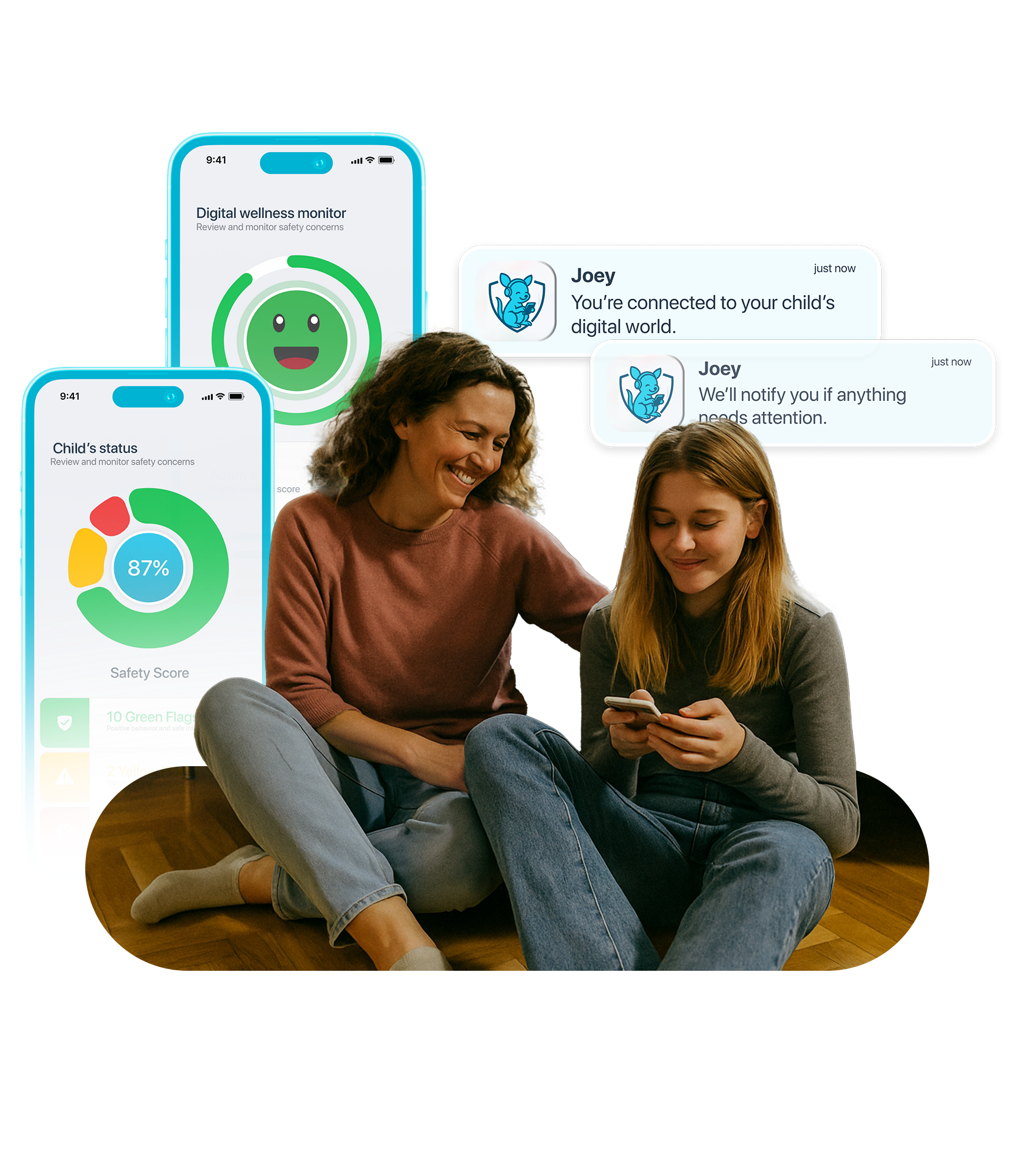
Why we built Joey (and why other monitoring apps fall short) As a family we have tried a couple online message monitoring services, like Bark and Bright Canary. What they can offer is just what parents/guardians and kids need, while ensuring privacy.
When we discovered these apps didn't work the way we needed, Francis and I decided to team up and build a product that is ethical, works well for parents/guardians, and is carefully designed for kids (with input from a great kid like Francis).
We're having a great time working on this together - and we're excited to share it with other families who want to take a balanced, thoughtful approach to online safety.
Final thoughts: AI can help - but conversations matter more.
Using AI to analyse messages gave us valuable insights, but it wasn't just about what we found. It was about the conversations those insights led to. What We Learned:
- Kids will swear and use obscene language - it's part of growing up. What matters is how they use it and whether they understand its meaning.
- Kids don't always tell parents/guardians everything, but that doesn't mean they're hiding things.
- Good monitoring tools help parents/guardians, but only if they lead to open, healthy discussions.
For parents considering message monitoring, our advice is simple:
- Talk to your child before scanning their messages.
- Use the insights as conversation starters, not punishments.
- Be transparent. The goal isn't spying, it's about understanding and guiding. Let's help each other navigate this new digital world together.
About the author Grant Callaghan is a parent, youth basketball coach, and data analyst. As the creator of JoeyFamily.com, he combines his technical expertise with his passion for child safety and wellbeing in the digital age. Grant writes about parenting, digital wellness, and creating safer online spaces for young people.