When parents talk about their child's online life, the questions are rarely simple.
It is not just "how much screen time are they getting?" or "which apps are they using?" Most parents are trying to understand something deeper: whether their child is safe, who they are interacting with, what they are being exposed to, and whether the family rules they have set are actually working.
To better understand those concerns, we asked more than 100 parents what they most wanted to know about their child's digital life.
Five themes came through clearly:
- Is my child safe online?
- What are they doing on their phone?
- How are they feeling?
- Are they being exposed to risky topics?
- Are our digital rules being followed?
These answers shaped how we think about Joey: not as a tool for reading every message, but as a way to give parents clearer signals about what may need a conversation.
The responses were eye-opening, and they directly shaped the Joey Smart Alerts and Flags system, one of the core features of Joey Family. The Smart Alert approach helps parents identify risks while respecting their child's independence. Setting clear digital ground rules is essential, but having visibility into potential issues is equally important.
Here are the top five concerns that emerged from our survey, along with insights into how we've designed Joey to address these needs. If you're interested in how we've personally handled this in our family, see the digital ground rules we use at home.
#1 - Is my child safe?
Strangers, peer pressure and inappropriate content
Far and away, the #1 concern among parents was safety. Parents want to know:
- Is my child talking to strangers?
- Are they being pressured into things they aren't comfortable with?
- Are they being exposed to harmful content?
Many parents put it bluntly:
"Is my kid safe from peer bullying? Are they safe from predators? This one's probably top of the list!"
"Who is my kid talking to?"
"Are they being exposed to inappropriate content? And are people acting inappropriately towards them?"
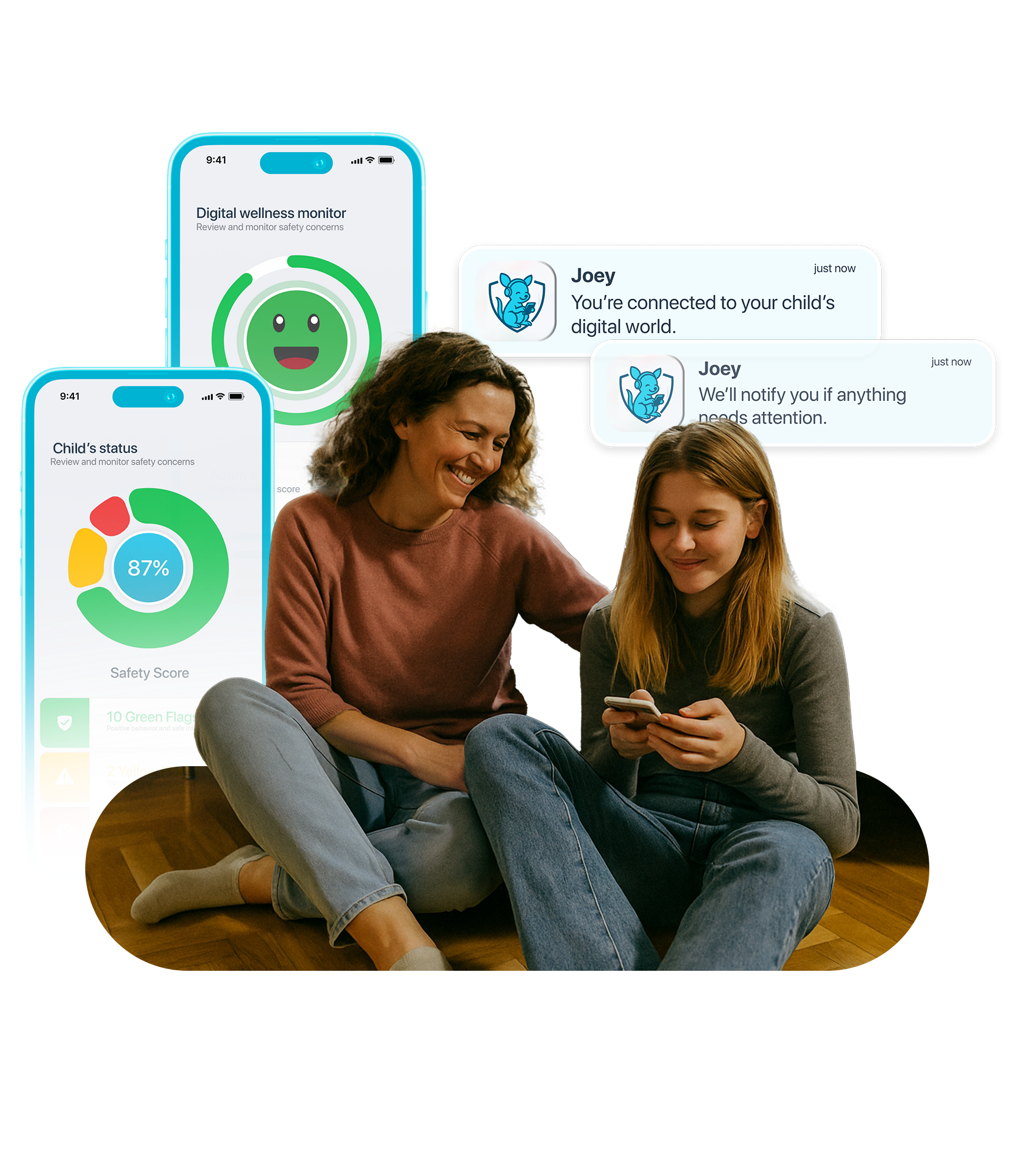
Some parents want simple traffic-light signals for safety, where "Green = all good, Yellow = let's talk, Red = major concern."
How Joey helps
The Joey Smart Alerts system was designed with Risky Contacts Verification, inappropriate content, profanity, and bullying, so parents and guardians get the right level of insight without reading every message.
#2 - What is my child actually doing online?
Apps, screen time and searches
Many parents don't just want to know about who their child is talking to, but where they are spending their time online.
- Which apps and sites do they visit the most?
- How much time are they spending online?
- What are they searching for?
"I want to know how much time they spend on each app and what kind of content they consume."
"I want to know what sites they're on, what content they're viewing, and what conversations they're having."
How Joey can help
While we use Screen, App and Downtime controls in our family, it isn't really a surprise that many parents, like us, still don't know what their kids are doing online and what controls should be set up.
In our next major feature, Joey will pull together all the screen time settings you have set per child and give recommendations on what changes to the controls you can put in.
Joey will also aggregate online activity and provide a single view of your child's online activity, app usage and search trends. Instead of spying, Joey can provide conversation starters for parents and guardians such as, "Hey, I noticed you're on [app] a lot, what do you like about it?"
#3 - Is my child ok?
Emotional wellbeing and friendships
A surprising and deeply important theme from parents in our survey group was not just safety, but happiness. Are my kids ok?
- Are they stressed?
- Are they struggling with friendships?
- Are they feeling left out or bullied?
- What's going on emotionally in their online world?
"Are you happy? What brings you joy? What are you grateful for today?"
"How are they coping with friends? Are they respected? Do they treat others with respect?"
"Is my son ever feeling peer pressure? Is there a dark side to his online world?"
How Joey can help
Joey doesn't just flag danger, it can also detect emotional tone changes in messaging. If there's a sudden shift in language (for example, frustration, loneliness or stress), it can be a prompt for parents to check in. Take a look at Joey's 'How's My Child?' report, one of the core features that provides a holistic view of your child's wellbeing and social relationships, formed by understanding your child's digital footprint. Joey Family is the only eSafety monitoring solution that assesses your child's complete history of messaging to really understand who your child is.
#4 - Is my child talking about risky topics?
Sex, porn, vaping, violence, and other concerning content
The parents we surveyed told us they need to know if their child's online conversations were heading into risky or inappropriate territory.
- Are they swearing excessively?
- Are they talking about sexual topics too early?
- Are they using disrespectful language? This can verge on hate speech, racism, denigrating women, and more.
"Swear words, strangers, and sexual references - that's what I want to know about."
"Does my son respect women? Are there any issues with gender disrespect?"
How Joey helps
Joey doesn't just detect swear words, it helps parents understand context. A harmless joke between friends is different from an aggressive insult. The system flags the most concerning conversations first, not just every minor bad word.
#5 - Is my child following our family's digital rules?
Family digital rules and boundaries
Many parents and guardians already set digital ground rules, but how do they know if their child is following them?
- Are they sticking to screen time limits?
- Are they avoiding restricted apps and sites?
- Are they being honest about their online activity?
"Is my kid living up to the guidelines we set? Trust but verify."
"Are they telling me everything they're doing?"
"Are they interacting with strangers online?"
How Joey helps
Joey isn't just about flagging risks, it's about reinforcing trust. Parents can use Joey's insights to have better conversations and adjust rules over time as kids earn more freedom.
Read our family digital ground rules
What this tells us
The survey made one thing clear: parents are not simply looking for more control.
They are looking for clarity.
They want to know whether their child is safe, who they are interacting with, how they are feeling, what they are being exposed to, and whether the rules set at home are actually working.
That is why Joey focuses on safety signals, not full message feeds. The goal is not to turn parents into detectives. It is to help families notice the right things earlier, so they can have better conversations before small issues become bigger ones.
If you are setting up your child's iPhone or trying to make sense of their digital life, start with the practical basics first:
Want to learn more about setting appropriate boundaries? Read our comprehensive guide on the digital ground rules we set in our family.
Digital ground rules we set in our family
For a kid's perspective on these issues, you might also enjoy reading about the impact of social media on teen mental health, written by my son, Francis.
Finally, if you would like to know what we first learned when we began using Joey. Some of what I share in this article is sensitive and a little embarrassing, but I think it is worth sharing if this helps other parents learn what practical options are out there that might be right for them. I don't care if you use Joey, I care that parents are aware that they do have options and they don't have to despair.
Three Things We Learned from Reviewing Our Child's Messages, and One Mistake I've Fixed
How Joey helps
Joey analyses your child's messages across popular messaging and social media platforms, providing parents with Smart Alerts across a range of concerns. Joey is designed to recognise teen communication patterns, slang and coded language while still respecting their privacy.