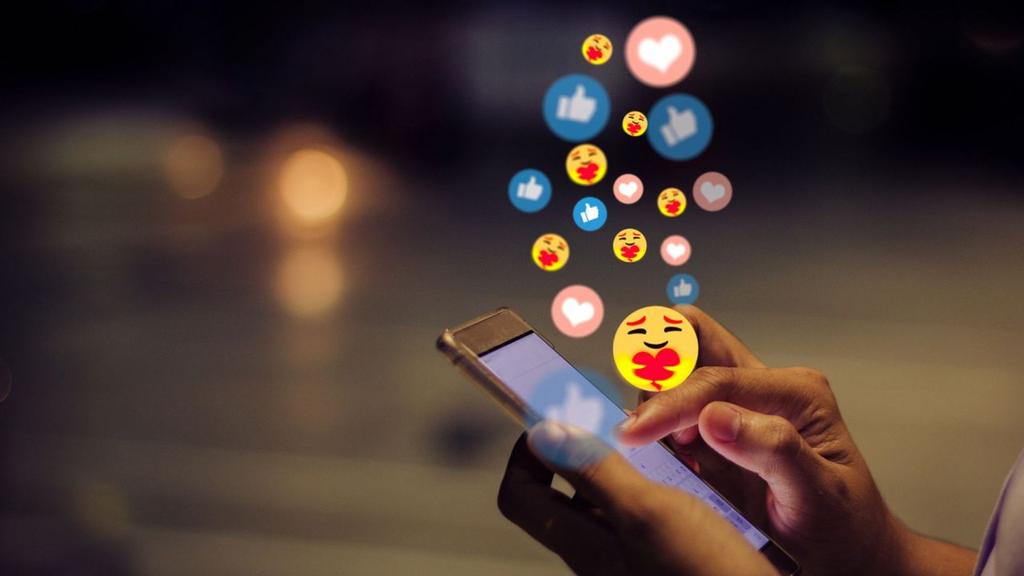
The use of emojis has grown exponentially in recent times. The small and colourful symbols have become somewhat of a universal language for digital communication.
They have enabled teenagers to create a new way of communicating. These symbols allow them to express emotions, tone and context in texts, social media and messaging apps.
They are now part of many people's daily interactions, creating a new normal in communication.
When used well, emojis can help reduce misunderstandings in written messages. Emojis are also a fast and efficient way to help express more complex emotions without the use of words.
Using trending or niche emojis can demonstrate a link to a particular group, inside joke or even a subculture. This can help strengthen friendships and make people feel a sense of belonging.
In this day and age, young people tend towards quick and visual-based communication. Replacing words with emojis speeds up conversations while still enabling some emotion. This is often evident on platforms such as Instagram and Snapchat.
However there is always a possibility that the intent of emojis can be misinterpreted and cause confusion. Different emojis may mean one thing to one person and something else to another, particularly across different age groups.
What might represent one emotion when posted could be misinterpreted by the person reading it. Multiple emotions used at one time can also be confusing and even dilute or trivialise a message.
A study, Benefits and Costs of Social Media in Adolescence, looked at how the reliance of adolescents on emojis and abbreviated language could impact their face-to-face conversations. The study found that relying too much on symbols could result in a struggle with verbally expressing emotions.
Concerningly, emojis are also being used as 'weapons' in online conversations. Particular icons can be used to bully others or used in a passive aggressive way. Because of the multiple, and sometimes ambiguous, meanings behind some emojis, it can sometimes be hard for adults to recognise a negative or bullying intent.
Emojis are here to stay. While they play a vital role in modern communication, providing a fast and expressive interaction, it's still important to watch for issues such as misinterpretation, bullying and any impact on a young person's verbal communication.
Joey was created to help parents and guardians navigate their child's online world. Learn more here.